
The secret root causes to belly fat. #3: Stress and Cortisol
The third and last one of the three main trigger for belly fat accumulation, even if the rest of the body is slim, is one that might just be the hardest to address, but oh so crucial. Stress!
But stress isn’t just emotional—it’s biochemical.
When we are ‘stressed’, our body thinks we are running away from a tiger, and goes into ‘fight-or-flight’ mode. It pumps out an arsenal of stress biochemistry, of which the most important one being cortisol.
Now people often talk about cortisol being ‘bad’. However, that is not quite the truth. Much like its bigger sister, inflammation, we actually need and want cortisol. It’s only when it gets out of hand, or in the case of cortisol, more so if is released at the wrong time of the day, that it turns into a problem.
The importance of the circadian rhythm
Our body has inner clocks, and depending on the time of the day, we are supposed to release different hormones. Contrary to popular belief, we actually want and need cortisol to be fairly high in the morning, in order to get the body going. It kickstarts our immune system, energy levels and metabolism.
However, we then want cortisol to gradually drop off throughout the day, and need it to be low at night in order for melatonin, our sleep hormone, to be able to rise and get a good night’s sleep.
It is when this daily curve is deranged that we run into problems.
When people talk about being ‘stressed out’, it usually correlates with cortisol being too high too late in the day, when it should have started to drop off. When that happens, our body literally gets ‘fried’ from the inside, and that high cortisol at the ‘wrong time of the day’ increases blood pressure, damages our cardiovascular system, hormonal balance, monthly cycle, skin, thyroid, brain health, and is linked to digestive issues, cancers, autoimmune disease and more.
However, on the flip side, research shows that low morning cortisol is also associated with a higher risk of autoimmune disease, cancers and obesity!
As you can see, cortisol isn’t inherently bad, it just turns into a problem when it gets released at the wrong time of the day!
A similar thing happens as it relates to our metabolism and muffin top. It used to be thought of as a paradox in research, that people initially in acute stress would eat less and lose weight, however if stress persisted, weight around the waist would start to pile on, including puffiness and that unwanted muffin top. How come?
It all appears having to do with
- that circadian (daily) rhythm – but also
- if cortisol is released while two other hormones, leptin and insulin, are high or low. Let me explain.
Insulin, which we looked at briefly in the previous blog post (you can find this here if you missed it!) on blood sugar, is a hormone released in response to food, in particular sugar and carbohydrates. Leptin is our satiety (‘fullness’) hormone, which also gets released after a meal, so signal the brain that we are now full and can stop eating.
What research found, which I found mind blowing, is that if cortisol is elevated while the other 2 are high as well (ie after we have eaten), it would make the brain send signals to store fat around the waist. If cortisol was high while leptin and insulin were low (as happens during a fasted state), it would stimulate fat burning!
Still following, or have I lost you? What that means in a nutshell, is that it is OK to be doing stressful things if we then not also start overeating (in particular foods high in sugars and fats, that tend to release more insulin and leptin!) – and ideally keep the ‘stressful’ tasks to the beginning of the day while fasted!
So when one says that they feel like they put on weight just by looking at a piece of cake..? If that happens while they are stressed out, there is truth to it! If someone eats while they are stressed, that same food gets metabolised differently, and is more likely to land on their waistline!
To work out fasted, or have breakfast first?
Now there is this whole debate about whether or not one should exercise fasted in the morning, or have a breakfast first. Research suggests that … it depends! It depends on what your goals are.
If your goal is to build muscle and bulk up, then you might want to have a protein rich breakfast before your workout.
If you are already muscly and just looking to maintain, but perhaps shed that layer of bulge around the midline, you might be better off getting your workout in early in the day while fasted – to time it with high cortisol, and low insulin and leptin… and then follow it with a nicely balanced, protein rich meal to make sure you keep your lean muscle mass.
How stress not only makes us store belly fat, but also makes us eat more!
Now to throw gasoline on the fire, and make this cortisol and metabolism connection even trickier, is that our biology, hardwired for survival, increases our cravings AND lowers our willpower to stop overeating. How come?
When we are relaxed and calm, our prefrontal cortex, the rational decision making portion at the front or our brain, reins. Chances are that it tells us anything from ‘no, you don’t need that piece of cake’, to ‘broccoli and chicken is a great choice’, and ‘you are now full, stop eating.’. It has the best interest of our future us in mind, and looks out for us.
However, we also have a different part of the brain, called the reptilian brain, right at the back. It’s a very old part of the brain, and all it cares about is survival in the moment. If we are stressed, this reptilian brain takes over, and out of the window go our wonderful choices, in favour of highly palatable foods that ideally store weight for future survival.
This makes it much harder to resist sweets and junk food when we are stressed, cravings and binge eating are literally hardwired into our biology.
Fun fact: The same happens after a night of bad sleep, btw. Our brain goes into survival mode, pumps out cortisol (in addition to inflammation, making it a double whammy), and making it THAT much harder to resist our cravings and stick to healthy choices! Plus, because now your body’s cortisol is out of balance, and you are inflamed, even if you do manage to make good choices, but the body now stores it differently.
The Myth of Willpower
We’ve been taught that fat loss is simple: eat less, move more. But if that were true, we’d all be effortlessly lean. The reality is that biology—not just willpower—runs the show, and can make it that much harder to stick to a healthy diet, even if we had the very best intentions.
What often sabotages your efforts:
- Hormonal imbalances (cortisol, insulin, thyroid, sex hormones)
- Chronic low-grade inflammation
- Blood sugar dysregulation
- Poor sleep and circadian misalignment
- Gut microbiome imbalances
- Post traumatic stress keeping you in a vicious cycle of stress – cravings and binge eating.
Sometimes I see patients that say ‘I am not stressed’, but their body says otherwise. The reason is often that while they might not feel emotionally stressed, there can be other ‘stressors’ in their life.
Your body doesn’t know the difference between:
- A tiger chasing you
- Your inbox overflowing
- Constant work travel or a high energy or responsibility job (which you might not feel to be stressful if you thrive under pressure and are the A type CEO/ high achievers I work with most commonly – but your body might!)
- Inflammation in your gut
- Mold in your home
- Ruminating thoughts about a stressful conversation
- Unresolved childhood trauma keeping you on hyperalert
They all trigger the same biochemical cascade: your adrenal glands release cortisol, the stress hormone, that, if released at the wrong time of the day, signals your body to store fat—again, right around your waist.
More on easy ways to test your stress levels, but also all the other co-factors in future posts.
Mini Summary: The Cortisol Curve and The Circadian Rhythm: What You Need to Know
Your cortisol should spike in the morning and drop steadily throughout the day. But in most people today, it is either:
- Too high all day (wired)
- Too low in the morning, then surges at night (causing sleep issues, wired yet tired)
- Flatlined due to long-term burning the candle on both ends
Each of these faulty patterns leads to:
- Fat storage around the midline
- Cravings
- Low energy
- Immune dysfunction
- Insulin resistance
- Increased risk of autoimmunity and cancer
The Vicious Cycle: How All Three Root Causes Work Together
Here’s the kicker: inflammation, blood sugar imbalance, and cortisol dysfunction are all interconnected.
- Stress increases blood sugar and inflammation.
- Inflammation messes with insulin and cortisol.
- Blood sugar issues fuel inflammation and stress.
- Stress also diverts blood flow away from your gut, making you more prone to ‘leaky gut’, chronic infections and food intolerances
- Which then increase the risk of more inflammation
This trifecta keeps your body in fat-storage mode 24/7—even if you’re doing everything “right.”
… And Their Impact on PCOS, hairloss, prostate issues, perimenopause chaos, longevity and more:
By now I am sure you can see how the muffin top and its underlying trigger, inflammation, blood sugar dysregulation and cortisol, are all linked to all sorts of other health issues, if they persist for a long time. So naturally, we want to address their root causes now, so that we look AND feel better, for longer.
But did you know that PCOS, while often spoken about in association with high testosterone, actually has inflammation (commonly from gut microbiome issues and hidden food intolerances!), cortisol AND blood sugar dysregulation at its root? These factors also upregulate the production of the more potent form of testosterone called DHT, linked to worsened PCOS symptoms such as acne, excess hair growth (hirsutism), irregular periods and more.
And did you know that both androgenic alopecia, the male pattern balding many men dread, and benign prostate enlargement (hyperplasia), both so very common, have been likened to the male versions of PCOS, as their underlying root causes are that similar (think DHT, insulin resistance, inflammation!) (R).
The goal of this blog post series was to give you a good understanding of the basic biology that underlies the muffin top, and how it is linked to age related decline.
My approach with patients is that if they understand the WHY, they will stick to the recommendations THAT much better, as they make sense. I mostly work with high achieving, A type individuals, that want to understand before they make changes to their already hectic lifestyles. By explaining the underlying reasons, my goal is to empower you to be able to sit in the driver seat of your own health transformation, and become the CEO of your health journey. Rather than yet another fad diet’s wagon to fall off of, because they are overly restrictive and don’t make sense to you.
If you would like to know simple yet powerful action steps that you can start right away to get rid of the muffin top, and optimise your health and longevity along the way, head to my self-paced course here.

Mirthe
It is my goal to empower you to become the CEO of your health trajectory, preventing and optimising with precision and science backed strategies to live your best life & thrive.

HI, I'M MIRTHE
It is my goal to empower you to become the CEO of your health trajectory, preventing and optimising with precision and science backed strategies to live your best life & thrive.
Let's Connect!
Get your FREE
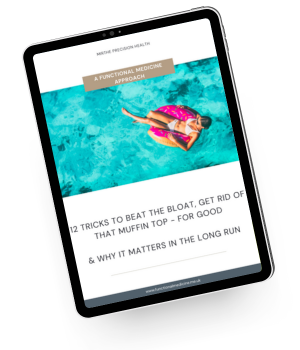
Ebook on How to get rid of your muffin top - for good